Best Exercises for Seniors to Prevent Falls (2026)
A fall doesn’t just cause a bruise for an older adult — it can genuinely change the course of their independence overnight. That’s why the right exercises for seniors matter so much more than…

Persistent, severe or urgent symptoms should always be assessed by a qualified healthcare professional.
A fall doesn’t just cause a bruise for an older adult — it can genuinely change the course of their independence overnight. That’s why the right exercises for seniors matter so much more than people realize, and why “just be careful” isn’t actually a fall-prevention strategy.
My grandmother had a minor fall in her kitchen a couple of years back — nothing serious, thankfully, but it scared the whole family enough to actually start her on a proper balance routine. Within about two months, her physiotherapist said her stability had improved noticeably. It’s genuinely not too late at any age to start this.
Why Balance Gets Worse With Age
Muscle mass naturally declines, joints get stiffer, and the body’s balance-related sensory systems — inner ear, vision, joint feedback — all slow down a bit. None of this is a fixed sentence, though; it can be slowed, and often partly reversed, with consistent, targeted movement.
Quick answer: Balance declines with age due to muscle loss, joint stiffness, and slower sensory feedback from the inner ear and vision, but regular balance-specific exercise can meaningfully slow or even reverse much of this decline.
1. Single-Leg Stands
Stand near a wall or sturdy chair. Lift one foot slightly off the floor and hold for 10-30 seconds, then switch. Simple, but genuinely one of the most effective elderly balance exercises out there — physiotherapists recommend it constantly for good reason.
2. Heel-to-Toe Walk
Walk in a straight line, placing the heel of one foot directly in front of the toes of the other — like walking a tightrope, minus the height. This sharpens coordination in a way normal walking simply doesn’t.
3. Sit-to-Stand Practice
Stand up from a chair without pushing off with the hands, then sit back down slowly and with control. It sounds almost too basic to matter, but this single move builds the leg strength that underlies most everyday balance.
[link to related guide on chair exercises for limited mobility here]
4. Marching in Place
Holding onto a countertop for support, lift the knees alternately as if marching. This strengthens the hip flexors, which play a bigger role in stable walking than most people give them credit for.
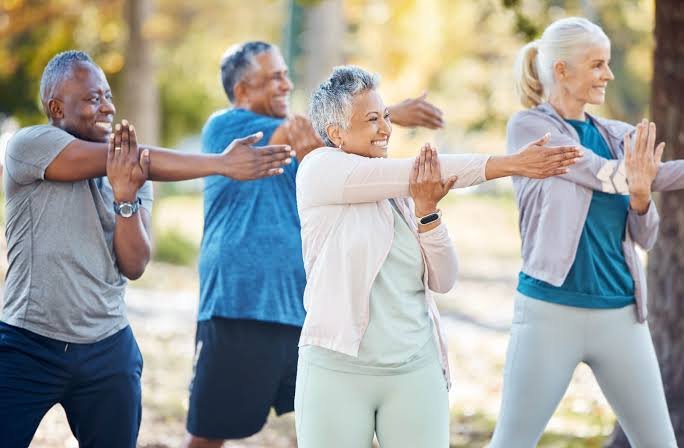
5. Tai Chi or Gentle Yoga
Physical therapists recommend both consistently for improving balance and body awareness through slow, deliberate movement. Many community centers and parks run free or low-cost sessions specifically for seniors — worth checking locally.
Quick answer: Tai chi is widely recommended by physiotherapists for seniors because its slow, controlled movements improve balance, joint flexibility, and body awareness without putting stress on the joints.
6. Standing Leg Lifts
Holding a support, slowly lift one leg out to the side and lower it back down, about 10 times per leg. This strengthens the hip stabilizer muscles that quietly do most of the balancing work when walking.
7. Resistance Band Training
Gentle resistance work with bands builds overall leg and core strength without the joint impact of weights. Even 10-15 minutes, two to three times a week, adds up over a couple of months.
[link to related article on strength training basics for seniors here]
Fall Prevention Beyond Exercise
- Non-slip, properly fitted footwear, indoors included — slippers are often worse than people think
- Clear floors of loose rugs, cords, and clutter, especially along common walking paths
- Good lighting, particularly on stairs and hallways at night
- Grab bars installed in bathrooms, near the tub or toilet
- Regular vision and hearing checkups, since both affect balance more than people assume
- A medication review with a doctor — some common medications cause dizziness as a side effect
How Often Should Seniors Practice Balance Exercises?
Two to three times a week is a solid target, ideally paired with light strength training. Consistency genuinely beats intensity here — 10-15 minutes a day tends to show visible improvement within a couple of months for most people.
FAQs
How long does it take to see improvement in balance? Many seniors notice a difference within 4-8 weeks of consistent practice, though this varies with starting fitness level and any existing health conditions.
Are these exercises safe for someone who’s already had a fall? Generally yes, but it’s best to start under the guidance of a physical therapist, who can tailor the exercises to individual risk factors.
Can balance exercises help with conditions like arthritis? Yes, gentle balance and strength work often improves joint stability and can reduce discomfort, though intensity should be adjusted around flare-ups.
Do seniors need special equipment for these exercises? No, most of these exercises just need a sturdy chair or wall for support — no gym equipment required.
Is walking alone enough to prevent falls? Walking helps with general fitness, but it doesn’t specifically train balance the way single-leg stands or tai chi do — a mix works better.
What’s the biggest cause of falls in seniors at home? Clutter, poor lighting, and loose rugs are among the most common home hazards, alongside muscle weakness and vision changes.
Conclusion
Fall prevention through exercises for seniors isn’t about intense workouts — it’s about small, consistent movements done a few times a week, paired with some sensible changes around the house. Start with single-leg stands and sit-to-stands this week if nothing else. If there’s already been a fall, or significant weakness, loop in a physical therapist rather than going it alone — a tailored plan makes a real difference.
Suggested Image Alt Text:
- “Senior practicing single-leg stand balance exercise near a chair”
- “Elderly person doing tai chi in a park for balance improvement”
- “Grab bar installed in bathroom for senior fall prevention” -e
Take the useful parts with you.
Save this resource, discuss concerns with a professional, and return to the bench for your next guide.

Admin
Medlento publishes practical, reader-first health and fitness resources with clear structure and responsible editorial guidance.